Furnace, Heat Pump & Refrigerated Air Conversions Across El Paso County
El Paso winters are mild until they aren't. Most Decembers you barely notice your furnace running — then a hard freeze rolls down out of the Franklins, the overnight low drops into the teens, and the twenty-year-old unit in your hall closet picks that exact week to quit. February 2021 taught the whole region what happens when heating systems built for "mostly mild" meet a genuine cold snap.
One Way Heating & Cooling installs and replaces heating systems for homeowners across El Paso, Horizon City, Socorro, and the surrounding communities. We've been doing it for more than two decades under Texas HVAC license TACLA30024E, and every residential installation we complete comes with a 10-year parts and labor warranty and 24/7 emergency service.
Free quotes. Financing available. No pressure.
Call (915) 525-5737 or request a quote online.
Start Your Quote
Heating Systems We Install
Not every El Paso home needs the same thing. What makes sense depends on your existing setup, your ductwork, whether you have natural gas service, and what you're doing about cooling.
Gas Furnaces
Still the most common heating installation we do in El Paso. Natural gas is inexpensive here, and a properly sized 80% or 96% AFUE furnace will heat a typical El Paso home for very little money over a season this mild. High-efficiency condensing furnaces (90%+ AFUE) need a condensate drain and PVC venting, which not every older home is set up for — we'll tell you upfront which one your house can actually take.
Heat Pumps
Heat pumps make more sense in El Paso than almost anywhere in Texas. Our winters rarely stay below freezing long enough to push a modern heat pump past its efficient operating range, and you get air conditioning out of the same box. If you're replacing heating and cooling at the same time — or converting from an evaporative cooler — a heat pump is worth a serious look. It's also the option most likely to qualify for an El Paso Electric rebate.
Package Units
Common on El Paso rooftops and on slabs beside the house, especially in the East Side and Northeast subdivisions built in the last thirty years. Heating and cooling in one cabinet. Replacement is usually straightforward, but rooftop work means we're also checking curb condition and roof penetrations.
Ductless Mini-Splits
The answer for additions, converted garages, casitas, and older Central and Sunset Heights homes with no ductwork worth saving. Also useful when one room in the house never gets warm and rerunning duct isn't practical.
Replacing a Gas Floor or Wall Furnace
If you're in a mid-century home in the Lower Valley, Central, or Five Points, there's a good chance you're heating with a gas floor furnace or a wall heater. These are typically standing-pilot units with no flame sensor and no automatic gas shutoff. We replace these regularly — usually with a central furnace or heat pump — and it's the single biggest safety upgrade most of these homes can make.
Refrigerated Air Conversions
A large share of older El Paso homes still cool with an evaporative cooler — a swamp cooler — and heat with a separate gas furnace or wall unit. When you convert to refrigerated air, you're not just swapping the cooler. You're often replacing or modifying the furnace and coil at the same time, adding or resizing return air, sealing the roof opening where the cooler sat, and running a new electrical circuit.
Doing it as one project instead of two is almost always cheaper and produces a better-matched system. If you're thinking about converting, talk to us about the heating side before you commit to a cooling plan.
Related: AC installation and refrigerated air in El Paso →
Why El Paso Installations Are Different
Two things about installing heat here that most out-of-market advice gets wrong:
Altitude changes the math. El Paso sits around 3,700 feet, and Horizon City is higher still. Gas appliances lose roughly 4% of their rated input for every 1,000 feet above 2,000 feet, which means a furnace shipped from the factory at sea-level settings won't perform to spec here. Manufacturers publish high-altitude conversion kits and derate procedures for exactly this reason. An installer who skips that step leaves you with a furnace that underperforms and burns dirty. We derate and verify combustion on every gas installation.
Oversizing is the local failure mode. Because our heating season is short and mild, contractors get away with lazy sizing — nobody notices a 20% oversized furnace in a climate where it only runs hard six weeks a year. But an oversized system short-cycles, wears out its heat exchanger early, and never dehumidifies or distributes evenly. We do a load calculation on your actual house: square footage, insulation, window area, orientation, ductwork. Not a rule of thumb.

Signs It's Time to Replace Your Heater
Your furnace is 15 years or older
Fifteen years is the point where repair costs start compounding and efficiency has meaningfully dropped. Age alone isn't a verdict — but it's the point to get an honest inspection.
It has a standing pilot light
Older units with a constantly burning pilot have no flame sensor and no automatic shutoff if the flame goes out. This is a safety issue, not a comfort one. If your heater has a standing pilot, replacement should be on your near-term list regardless of how well it's running.
Strange noises
A healthy heating system is close to unnoticeable. Groaning, squealing, banging on startup, or a rumble that lingers after shutdown all point to failing components — inducer motors, cracked heat exchangers, delayed ignition.
It short-cycles
Turning on and off in rapid bursts means the system can't match your home's actual demand — usually a sign of an oversized unit, a failing limit switch, or restricted airflow. It burns fuel without producing comfort.
Rising gas bills with no change in usage
If your winter bills climb while your thermostat setting stays put, the system is working harder to deliver the same heat.
Uneven heating between rooms
Often a duct problem rather than an equipment problem — worth diagnosing before you buy anything. We'll tell you if the fix is cheaper than a replacement.
Yellow burner flame or soot
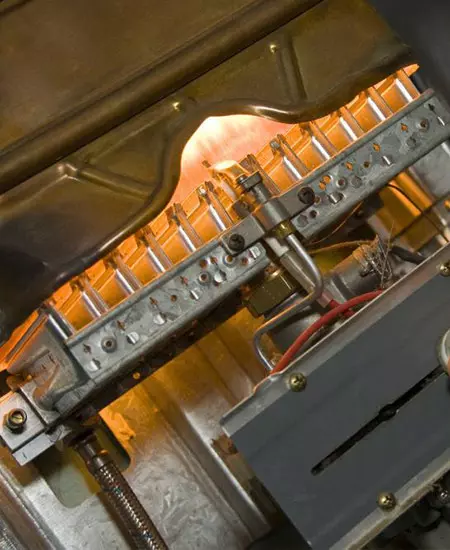
Stop and call us. A gas flame should burn blue. Yellow or orange flames, soot around the unit, or a persistent gas smell can indicate incomplete combustion and a carbon monoxide risk.
What Heating Installation Costs in El Paso
Straight answer: most residential heating installations in El Paso depend on real variables, not sales tactics.
What moves the number:
- System type. A like-for-like 80% AFUE gas furnace swap sits at the bottom of the range. A high-efficiency heat pump with electrical work sits at the top.
- Sizing. Bigger house, bigger equipment.
- Ductwork condition. If your ducts are undersized, leaking, or 40 years old, fixing them is part of the job. We'll show you what we found.
- Venting and gas line. Condensing furnaces need new PVC venting and a condensate drain. Upsized equipment can require a larger gas line.
- Electrical. Heat pumps need a dedicated 240V circuit. Some older panels don't have room, which adds cost.
- Permits and inspection. Included in our quote, never a surprise line item.
We give free, itemized, written quotes before any work starts, and we offer financing so a failed furnace in January doesn't have to be a five-figure emergency.
Our Installation Process
1. Free in-home assessment. We look at your current system, your ductwork, your gas and electrical service, and your home's actual heating load. We ask what's been bothering you about the old system.
2. Written quote with options. Usually two or three, at different price points, with the tradeoffs explained. No same-day pressure discounts.
3. Permit pulled. Heating installations require a mechanical permit. In the city, that's through El Paso Planning and Inspections; Horizon City, Socorro, and unincorporated county addresses go through their own building departments. We handle it and we close it out — an open permit becomes your problem at resale.
4. Installation. Most residential replacements are a single day. Conversions, duct modifications, and electrical upgrades can run two.
5. Startup and verification. We derate for altitude, verify combustion and gas pressure, check static pressure and temperature rise, and confirm the system is performing to spec — not just that it turns on.
6. Walkthrough. We show you the thermostat, the filter, what to watch for, and how the warranty works before we leave.
7. Inspection and closeout. We meet the inspector and get the permit finalized. You get a copy.
Brands We Install
York, Tempstar, Champion, Ruud, Trane, and Carrier. We're not locked into one manufacturer, which means we can recommend based on what fits your home and budget rather than what we're required to sell.
Why El Paso Homeowners Choose One Way
- Over 20 years serving El Paso and El Paso County
- Locally owned and operated — based in Horizon City, not a national franchise
- Texas licensed — TACLA30024E
- 10-year parts and labor warranty on residential installations
- 24/7 emergency service
- Free, written, itemized quotes with financing available
- Permits pulled and closed on every installation
Service Area
One Way Heating and Cooling installs heating systems throughout the greater El Paso region. From our home base in Horizon City, our technicians provide fast, local furnace installation to:
- El Paso (East Side, West Side, Northeast, and Lower Valley)
- Horizon City
- Socorro
- Clint
- San Elizario
- Fabens
Not sure if you're in our service area? Call (915) 525-5737 and we'll let you know right away.
Schedule Your Free Heating Installation Quote
Whether your furnace finally quit or you're planning ahead before winter, we'll give you a straight assessment and a written quote at no cost.
Contact us online or at (915) 525-5737 to learn more about our heating installation in El Paso!
Get Started
Frequently Asked Questions
How long does a heating installation take?
Most residential furnace or heat pump replacements are done in a single day. If we're also modifying ductwork, converting from evaporative cooling, or adding an electrical circuit, plan on two days.
Do I need a permit to replace my furnace in El Paso?
Yes. Replacing heating equipment requires a mechanical permit and inspection throughout El Paso County. We pull it, schedule the inspection, and close the permit out. If a contractor offers to skip the permit to save you money, that's a reason not to hire them — unclosed and unpermitted work shows up during a home sale.
Is a heat pump a good choice in El Paso?
For most homes, yes. Our winters are mild enough that a heat pump operates in its efficient range nearly all season, and you get cooling from the same equipment. Homes with existing natural gas service and a working furnace sometimes do better with a gas replacement — we'll run both numbers for you.
What size heating system does my house need?
That comes from a load calculation, not square footage alone. Insulation, window area and orientation, ceiling height, and duct condition all factor in. Anyone who quotes you a tonnage over the phone is guessing.
Do you offer financing?
Yes. We have financing options so a system failure doesn't have to be paid all at once. Ask when we quote.
What warranty comes with a new system?
Every residential installation includes a 10-year parts and labor warranty from us, on top of the manufacturer's equipment warranty.
Can you convert my swamp cooler to refrigerated air?
Yes, and it's one of the more common projects we do. If your heating system is also aging, doing both at once is usually cheaper than doing them separately and gives you a properly matched system.
Should I repair or replace my heater?
If the unit is under 10 years old and the repair is a few hundred dollars, repair. If it's over 15, has a standing pilot, or the repair approaches a third of replacement cost, replacement usually wins. We'll give you the honest version — heating repair is often the right call and we'll say so.
My heater is 20 years old but still works. Do I have to replace it?
No. But get it inspected. Older units fail without warning, usually on the coldest night of the year, and a 20-year-old furnace with a standing pilot has real safety limitations. Knowing where you stand beats finding out in January.